OVERVIEW
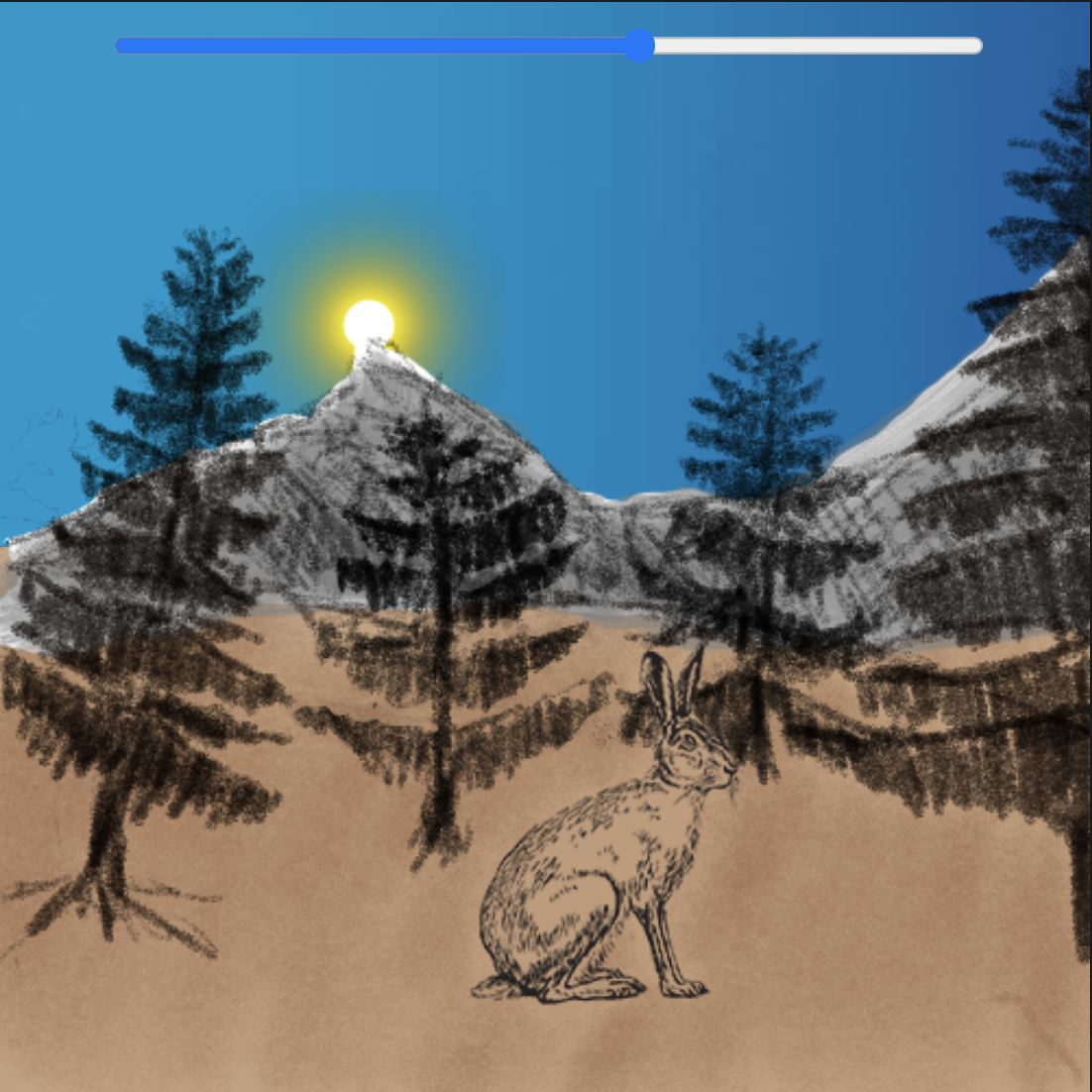
I took a class called “Time” as part of my master’s program at NYU’s Interactive Telecommunications Program as a way to explore unconventional approaches to designing and building projects involving technology. For this sketch, created in p5.js, I created a physical representation as part of investigating how we can use nature as cues to the progression of the seasons and time.
Why the Snowshoe Hare?
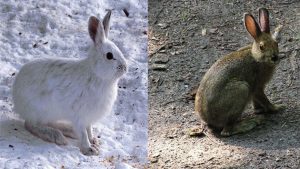
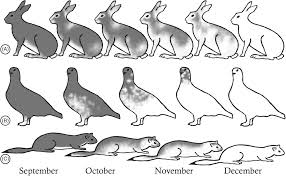
Over the summer of 2020, I had my shoulder re-replaced and spent a lot of time watching TV while I recovered. I was watching an episode of season 7 of Alone on the History Channel, set in the Arctic, when I saw something that caught my attention. One of the contestants commented that she knew winter was near because the rabbits around her camp were turning white. Then, on the screen, a nature fact appeared indicating that these rabbits—snowshoe hares, technically—change colors due to a receptor in their eyes that senses when the daylight hours were growing shorter as winter approaches.
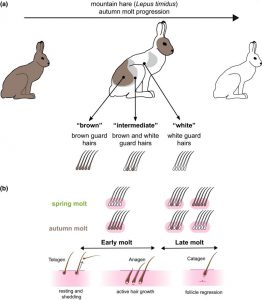
I don’t know why that made such an impression on me, but I appreciated that, not too unlike navigating by the stars, for a long time–and likely across many cultures in similar regions, this (and similar) complex biological response(s) has been used as an indicator of the passage of time, even when not fully understood.
Process
I created this sketch as a thoughtful activity to visualize the changes in time, seasons, and appearance of the snowshoe hare. I found open-licensed images online for the rabbit and sun and created the rest of the images using Procreate, then formatting them in Photoshop. If you’re interested in checking out the code I used, take a look here for my “The Snowshoe Hare’s Timeless Coat” p5.js sketch. A good deal of my time was spent working to create the images and reformatting them so p5 wouldn’t do weird stuff. (I kept getting a lot of lag and color distortions.)
Here’s a direct link to my sketch The Snowshoe Hare’s Timeless Coat on p5js
When you interact with this sketch, you’ll start at the beginning of the year in the Arctic—January, when the daylight is scarce, snow is on the ground and the snowshoe hare is blended into the surrounding environment. As you move the slider through the year, you’ll see more light, the snow melt away, and the snowshoe hare, once again, blend into its surroundings before returning to white when winter returns.
Takeaways
The biggest takeaway from this project is very similar to when I started, which is that inspiration can be found everywhere–including (or, perhaps, especially?) nature. Looking into the subject, however, I discovered much more on this topic than I had expected to. I’m also very inspired by the idea of using nature for inspiration in design as is done in the field of biomimicry–that is incredible!
I also learned from articles such as Climate change means snowshoe hares stands out like lightbulbs against a snowless background that humans are impacting how these incredible processes exist within our world today and what it might mean moving forward.