OVERVIEW
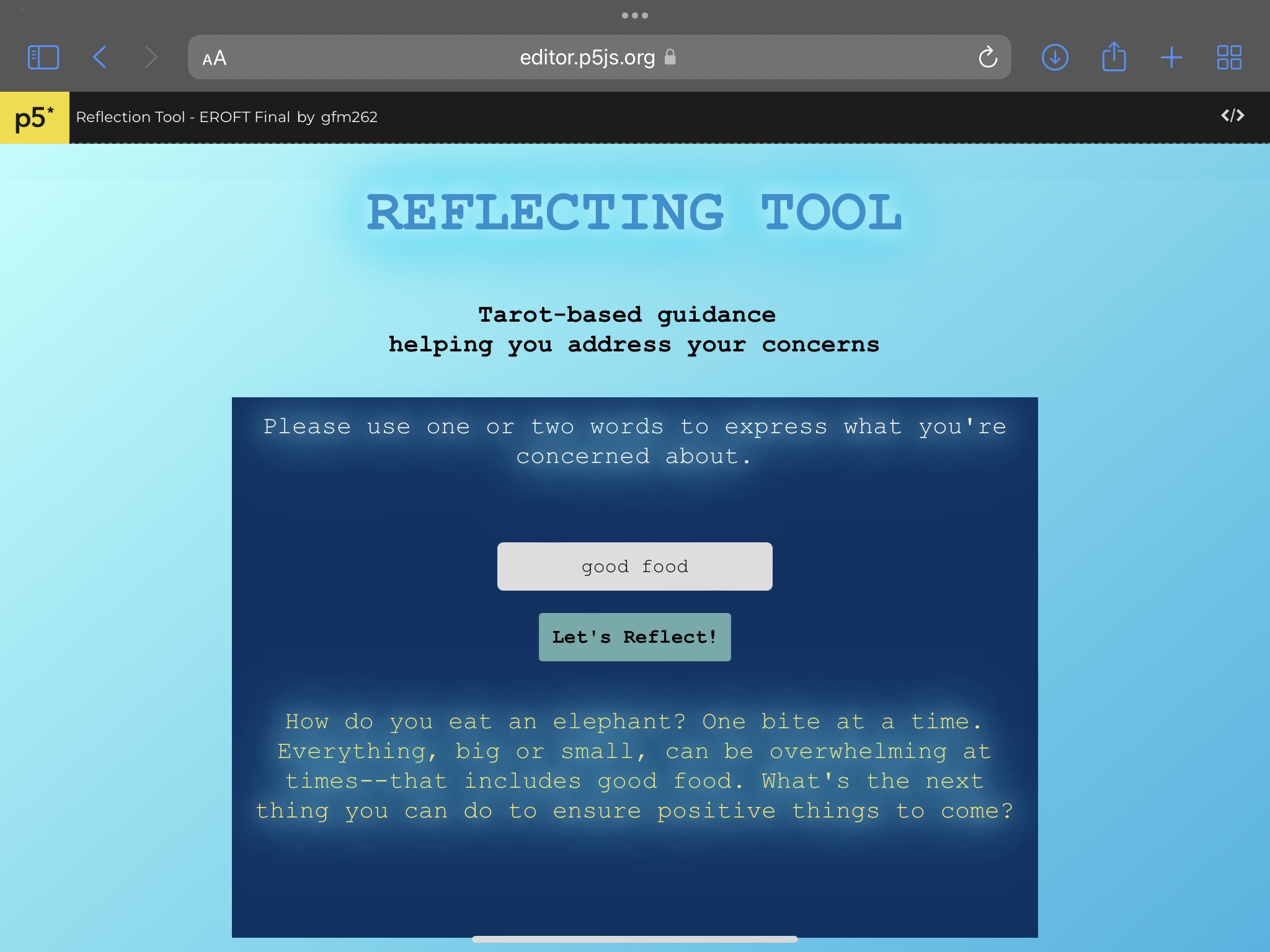
Drawing inspiration from an unlikely, but seemingly obvious, resource, this project sets up a digital interaction, returning tarot inspired responses to queries made by users. The two main goals for this project were to practice/improve using my coding skills (especially JavaScript) and to learn new ways of thinking that I might be able to take advantage of in working on future projects. This final project incorporates both of these. Check it out:
Why the Reflecting Tool?
Drawn to concept elaborated on in Italo Calvino’s The Castle of Crossed Destinies, I find something particularly mystifying and exciting about the idea of a deck of 78 (tarot) cards being used to explain ANY circumstance in life. My hope at the start of the assignment was to gain a deeper sense of these cards’ meanings through interacting with them. I also wanted to try my hand at formatting texts so that they could be used in fairly broad ways.
Process
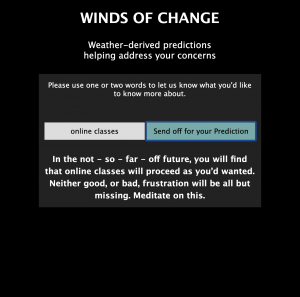
For this project, I built on a previous project that had a similar setup (see my mediation project called “Winds of Change”); there the user would be prompted for a concern and then receive a response below. The appearance is similar; however, I took the time to learn how to make subtle design changes, most notably the glowing effect and the gradient background color. Because I wanted the vibe of the Reflecting Tool to give off reflecting-pool vibes, I thought the glowing elements and the blue gradient background would add a calming effect to the appearance of the project.
In terms of my work on the code, though, I’m more proud of accomplishing the goal of learning how to change out the possessives to create a more personalized interaction! To do this, I had to split the users’ concerns, map changes of 1st person possessives to 2nd person possessives, and then reassemble the querents’ concerns to appear as though the meditation is speaking directly to the querent.
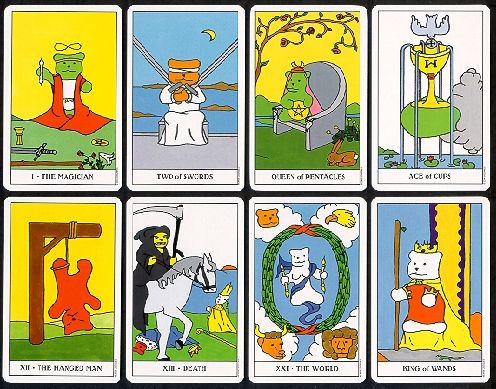
What I’m most proud of, though, is the hours (and hours) I spent with the tarot cards and the work I put into creating the data for this project to output. I started by pulling out my (Gummy Bear) Tarot deck I bought for these projects and looking through them. After reading through the booklet that came with them, perusing the cards, and trying to get a “feel” of them, I found generic descriptions for each of the cards in the Rider-Waite tarot deck and pulled them into an Excel spreadsheet; specifically, I chose the descriptions for the cards that were listed for when they are interpreted in their upright position. Here’s a copy of my Tarot_Decriptions_(draft) spreadsheet.
Once I had that done, I made a column in my spreadsheet where I could write down several keywords that would relate my impression of the full tarot descriptions. From there, I created 78 individual custom responses, which included interpretations and thought-provoking questions into which querents’ concerns could be incorporated.
Takeaways
In working on this project, I spent a lot of time with tarot and reading the descriptions for all the different cards, working to get a feel for each of them. I really tried getting a sense of what similar traits the cards within each suit shared, which was harder for me to discern than I expected, and was able to more easily recognize a lot of similarities in descriptions among cards of the same rank/number. For example, the Ace cards tended to involve new beginnings, Two cards tended to be about balance, and Five cards focused on struggle and conflict. It’s completely possible that, because there were more cards in a suit to find similarities between, picking out similarities among four cards was easier. (I did some reading online about the different suits and their meanings and there’s ton of that stuff on Google, but I chose to write this based on my impressions before researching tarot more deeply.)
The biggest impression from this project was left on me by how there are so many overlapping similar description traits which all add up somehow to produce a complete deck, full of nuances. I’m really appreciative for this insight and the opportunity to work with such a simple, yet robust, tool. I look forward to incorporating tarot (and other concepts which inspire unconventional approaches in thinking) in future projects and absolutely plan to turn to Calvino’s storytelling technique the next time I’m stuck on a project’s narrative.